

Зміст
If you’re searching how to detox your body naturally at home, you’re probably trying to feel lighter, clearer, and more in control. Good goal. But here’s the reality: your body already “detoxes” every day through your liver, kidneys, gut, lungs, and skin. What most detox plans sell is urgency. What actually works is boring—but powerful—daily inputs you can control.
This guide keeps it evidence-first, safe, and practical. You’ll get a simple framework, a checklist, two comparison tables, and a beginner-friendly plan.
What does “detox” actually mean in the body?
In physiology, detoxification is mostly about transforming and eliminating compounds:
- The liver converts many fat-soluble substances into forms that are easier to eliminate.
- The kidneys filter blood and remove wastes and extra water to make urine.
- The gut moves bile-bound waste out through stool, supported by regular bowel habits and fiber.
So the most accurate “natural detox at home” is: reduce avoidable load + support normal elimination pathways (sleep, hydration, movement, whole foods).
Why do commercial detoxes feel convincing?
Detox programs often combine:
- Calorie restriction (temporary weight drop, mostly water/glycogen)
- Diuretics/laxatives (temporary scale changes, higher dehydration risk)
- Simple rules (less decision fatigue)
NCCIH notes that “detoxes and cleanses” can include fasting, juice-only patterns, herbs, supplements, colon cleansing, and sauna-based claims—and highlights that marketing often outpaces evidence.
Table 1 — Detox claims vs. what’s more likely happening
| Detox claim | What’s more likely | What to do instead |
|---|---|---|
| “Flush toxins fast” | Less food + more water changes bloating and scale weight | Build a steady routine (fiber, sleep, movement) |
| “Colon cleanse removes buildup” | Laxative effect; can disrupt fluids/electrolytes | Support regularity with food + hydration |
| “Sweat out toxins” | Sweat cools you; liver/kidneys do most elimination | Exercise for circulation and health, not “toxin sweating” |
Which at-home habits support detox pathways the most?
Think of these as the “big levers.” They’re not flashy, but they’re high-signal.
1) Hydration: enough fluid to support normal kidney work
Healthy kidneys filter blood continuously and remove wastes via urine.
Instead of obsessing over a perfect number, use urine color (pale yellow) and thirst as guides. Reference intakes often cited: ~3.7 L/day total water for men and ~2.7 L/day for women (includes water from food and beverages).
Practical moves
- Start the day with water before caffeine.
- Add watery foods (soups, fruit, cucumbers).
- If you sweat a lot, replace fluids gradually (don’t chug).
2) Fiber: the “quiet detox” most people miss
Fiber supports bowel regularity and gut health. It also helps you feel full and tends to crowd out ultra-processed foods.
Dietary Guidelines recommend roughly 22–34 g/day for adults (varies by age/sex).
Many adults average about ~15 g/day, about half the target.
High-impact swaps
- Breakfast: oatmeal + berries + chia
- Lunch: beans/lentils added to salads or soups
- Snacks: nuts + fruit instead of refined snacks
3) Sleep: your recovery and regulation multiplier
The American Heart Association recommends 7–9 hours for most adults.
Large-scale research coverage suggests only about one-third of adults hit that range on average.
Why it matters for “detox”
Poor sleep can worsen cravings, decision-making, and metabolic regulation—leading to higher intake of alcohol and ultra-processed foods (common “toxic load” drivers).
4) Movement: lymph flow, circulation, and metabolic cleanup
CDC guidance: adults should aim for 150 minutes/week of moderate activity and 2 days/week of muscle strengthening.
You don’t need hard workouts. A daily brisk walk + strength twice weekly is enough to shift energy, mood, and digestion.
5) Alcohol: the most underrated detox lever
WHO states alcohol use is linked to multiple diseases and estimates 474,000 cardiovascular deaths in 2019attributable to alcohol consumption.
WHO Europe has also emphasized that no level of alcohol consumption is safe for health (risk increases with intake).
If you want a real “detox,” reducing alcohol is one of the highest-yield steps.
6) Ultra-processed foods: reduce the additives-and-overeating trap
Higher ultra-processed food intake is consistently associated with worse health outcomes in large observational studies and umbrella reviews.
You don’t need perfection. You need replacement:
- Replace one UPF snack/day with nuts + fruit or yogurt.
- Replace sugary drinks with water or unsweetened tea.
Can herbs help with detox—and how to say it accurately?
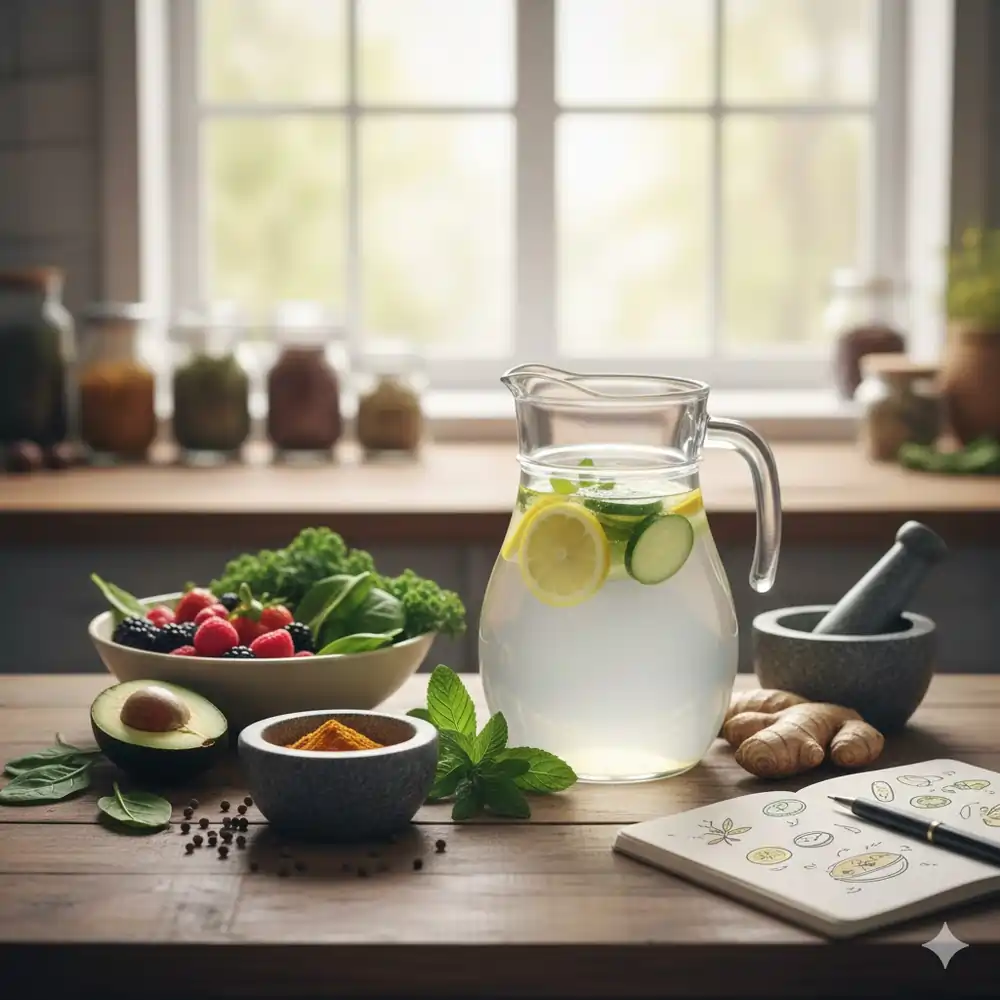
Herbs can be useful—just not in the “magic toxin eraser” way. The strongest, safest framing is that some herbs may support digestion, hydration, and antioxidant intake, which can indirectly support the body’s normal elimination systems.
NCCIH notes that many detox programs involve herbs, but evidence varies and safety depends on the product and the person.
Where herbs can fit (beginner-safe)
- Digestive comfort: herbs traditionally used for bloating or after-meal heaviness
- Hydration support: herbal teas as a way to drink more fluids
- Food-first botanicals: culinary herbs/spices that make whole foods easier to enjoy
If you’re exploring this angle, think “support,” not “treat”—and keep it simple, like a gentle herbal body cleanse approach built around tinctures, fiber-rich meals, and sleep.
Safety notes (important)
- Herbs can interact with medications.
- Avoid detox teas that function like laxatives.
- If you’re pregnant, trying to conceive, or managing a condition, talk to a clinician before using concentrated herbal products.
What should you avoid when detoxing at home?
Red flags that are common
- Colon cleanses/colonics for “toxin removal”
- Laxative-based detox teas
- Extreme fasting without medical supervision
- “Guaranteed toxin removal” claims
Cleveland Clinic and NCCIH both emphasize skepticism about strong detox claims and encourage caution.
Also, sweating is not your primary detox route. Sweat mainly cools the body; liver and kidneys do most “toxin” handling.
A simple 7-day at-home “detox” plan that’s actually realistic
This is not a cleanse. It’s a reset that supports normal body systems.
Checklist (doable for beginners)
- Hydrate: water with each meal + between meals
- Fiber anchor: add one high-fiber food daily (beans, oats, berries, chia)
- Move: 20–30 minutes walking most days
- Sleep window: consistent bedtime/wake time; aim toward 7–9 hours (adults)
- Alcohol pause: reduce or skip for the week
- UPF swap: replace one ultra-processed item/day with whole food
- Gentle herbs (optional): unsweetened herbal tea for hydration
Table 2 — Home actions and what they support
| Action | Main system supported | Why it helps |
|---|---|---|
| More water + watery foods | Kidneys | Supports urine-based waste removal |
| More fiber | Gut | Regularity and microbiome-friendly diet patterns |
| Regular sleep | Whole-body regulation | Supports recovery and healthier food choices |
| Weekly activity target | Circulation/metabolic health | Improves overall health markers |
| Alcohol reduction | Liver/heart risk reduction | Alcohol linked to major disease burden |
| Fewer ultra-processed foods | Overall risk reduction | Associations with worse health outcomes |
FAQ
1) How to detox your body naturally at home fast?
Focus on basics that support normal detox pathways: hydrate, eat fiber-rich foods, sleep well, move daily, reduce alcohol, and cut ultra-processed foods.
2) Do detox teas actually detox your body?
Most “detox” benefits come from hydration or laxative effects, not true toxin removal. Be cautious with laxative-based teas.
3) What organs detox your body naturally?
Primarily the liver and kidneys, supported by the gut and lungs. Kidneys filter blood to make urine; the liver metabolizes many compounds for elimination.
4) Can you sweat out toxins?
Sweat mainly cools you. It’s not the main detox route; liver and kidneys handle most toxin processing and elimination.
5) What’s the safest “detox” diet at home?
A whole-food pattern: vegetables, fruit, legumes, whole grains, adequate protein, and enough water—without extreme restriction or colon cleansing.
6) When should you skip home detox plans and get medical advice?
If you have severe symptoms (high fever, persistent vomiting/diarrhea, confusion), an eating disorder history, are pregnant, or take prescription meds with narrow safety margins.
Glossary
- Detoxification (physiology): processes that transform and eliminate compounds, largely via liver and kidneys.
- Ultra-processed foods (UPFs): industrial formulations with additives; higher intake associated with worse health outcomes.
- Dietary fiber: plant components that support gut regularity and metabolic health.
- Diuretic: increases urine output; can raise dehydration risk if misused.
- Laxative: speeds bowel movements; frequent use can be risky.
- Homeostasis: the body’s internal balance systems (fluids, temperature, electrolytes).
- AHA (American Heart Association): provides sleep and lifestyle recommendations used in prevention frameworks.
How to Detox Your Body Naturally at Home | Conclusion
The best way to detox at home is not a cleanse. It’s a short, steady reset: hydration, fiber, sleep, daily movement, less alcohol, and fewer ultra-processed foods—because that’s what supports the systems that already do the work.
Sources
- National Center for Complementary and Integrative Health (NCCIH). “Detoxes” and “Cleanses”: What You Need To Know (2024). hxxps://www.nccih.nih.gov/health/detoxes-and-cleanses-what-you-need-to-know
- NIDDK (NIH). Your Kidneys & How They Work (2025). hxxps://www.niddk.nih.gov/health-information/kidney-disease/kidneys-how-they-work
- CDC. Fiber recommendations (Dietary Guidelines for Americans 2020–2025) (2024). hxxps://www.cdc.gov/diabetes/healthy-eating/fiber-helps-diabetes.html
- UCSF Health. Increasing Fiber Intake (n.d.). hxxps://www.ucsfhealth.org/education/increasing-fiber-intake
- American Heart Association. Life’s Essential 8 + sleep recommendations (2024). hxxps://www.heart.org/en/healthy-living/healthy-lifestyle/lifes-essential-8
- American Heart Association. What is good sleep and how much do I need? (2024). hxxps://www.heart.org/en/healthy-living/healthy-lifestyle/sleep/what-is-good-sleep-and-how-much-do-i-need
- WHO. Alcohol Fact Sheet (2024). hxxps://www.who.int/news-room/fact-sheets/detail/alcohol
- WHO Europe. No level of alcohol consumption is safe (2023). hxxps://www.who.int/europe/news/item/04-01-2023-no-level-of-alcohol-consumption-is-safe-for-our-health
- CDC. Adult Physical Activity Guidelines (2023) + updates pages (2023–2025). hxxps://www.cdc.gov/physical-activity-basics/guidelines/adults.html
- Cleveland Clinic. Sweat: not the main way toxins leave the body (2024). hxxps://my.clevelandclinic.org/health/body/sweat
- BMJ. Association of ultra-processed food consumption with all-cause mortality (2024). hxxps://www.bmj.com/content/385/bmj-2023-078476
- Dai S, et al. Umbrella review on ultra-processed foods and health (2024). hxxps://www.sciencedirect.com/science/article/pii/S0261561424001225

